Iraqi law recognises private agreements, but it does not treat every document as equal when it comes to proving and enforcing them. The difference between a contract signed between the parties and one authenticated before the notary public — the Kateb Al-Adel, operating under the Ministry of Justice — can decide whether you spend a year proving your case or go straight to enforcement.
If you are documenting anything of value in Iraq, this is the distinction to understand before you sign.
What the notary public does
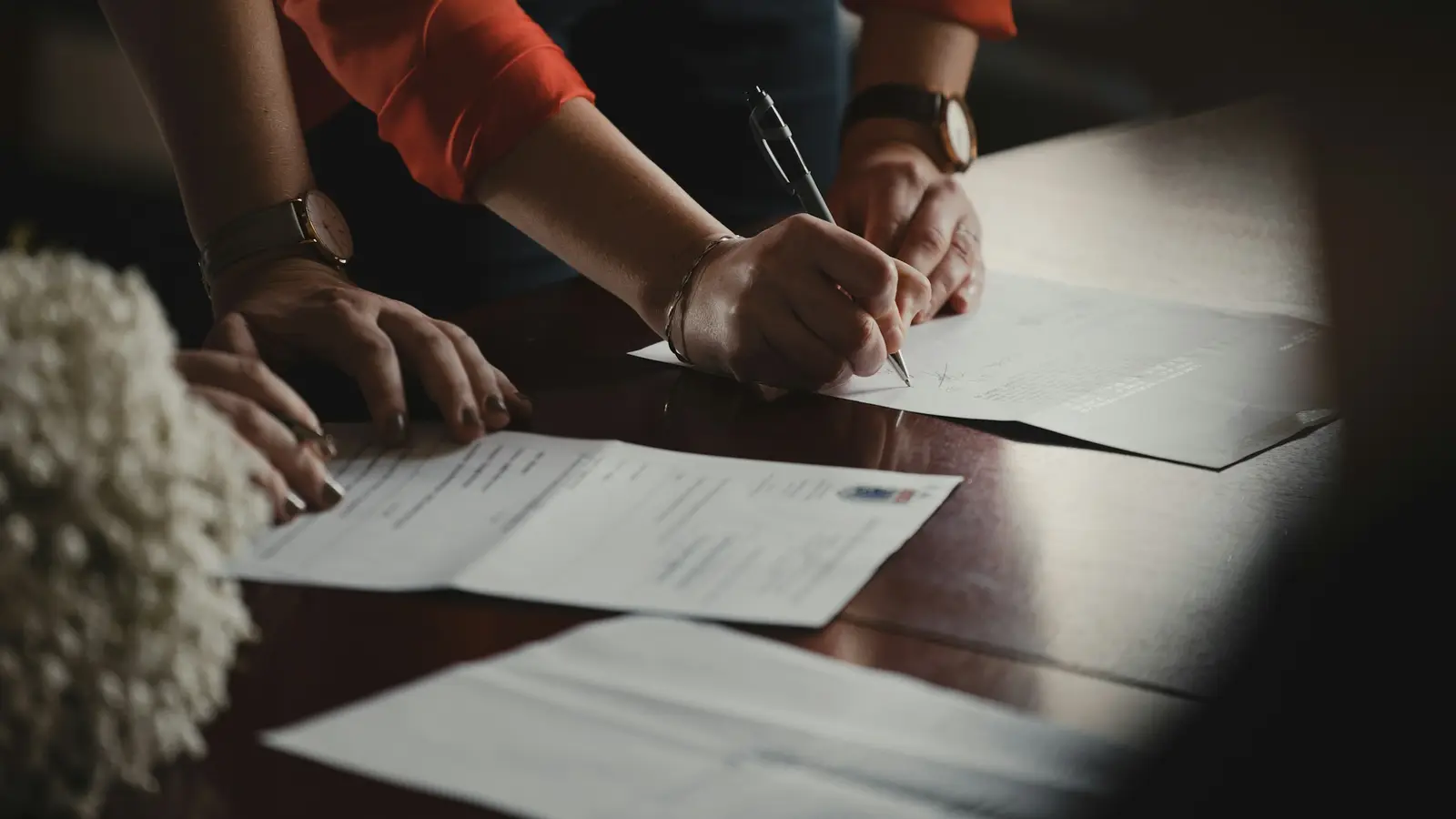
The notary public is a public official who authenticates documents and transactions, verifying the identity and capacity of those appearing and recording the instrument in official form.
That does two things. It makes the document very difficult to dispute later — the signatures, the identities and the fact of the transaction are officially recorded, so a party cannot credibly claim they never signed. And, for certain categories of instrument, it opens the door to enforcement without first having to sue to establish the obligation.
The second point is the one commercial parties consistently undervalue. Documents authenticated before the notary public are the clearest example of instruments Iraqi law treats as directly enforceable, which means a creditor may be able to proceed to the Execution Directorate rather than beginning with a lawsuit.
Why the form of your document matters so much
Iraqi civil litigation is documentary in character. Courts give substantial weight to written and official evidence, and rather less to recollection.
That produces a predictable pattern. Where a transaction is recorded in an official or authenticated instrument, disputes tend to be short, because there is little room to argue about what was agreed. Where it rests on an unsigned draft, a chat message, or an understanding between people who trusted each other, disputes tend to be long, expensive and unpredictable.
The cost difference between documenting something properly and documenting it casually is trivial at the time of signing and very large afterwards.
Transactions where formality is not optional
Some transactions in Iraq are not simply better in official form — they require it.
Registered real estate is the clearest case: ownership transfers through registration at the Real Estate Registration Directorate, and a private contract of sale, however well drafted, does not by itself transfer title.
Company formation documents must be in the form the Companies Registrar accepts. Powers of attorney intended to authorise significant acts — selling property, conducting litigation, operating bank accounts, completing government transactions — generally need to be authenticated to be accepted by the body relying on them.
Before signing anything significant, the question to ask is not only "is this agreement clear?" but "is this agreement in the form the relevant Iraqi authority will accept?"
Documents coming from abroad
A document executed outside Iraq is not automatically usable inside it.
The usual route is certified translation by a translator licensed for the purpose, followed by legalisation through the consular chain — authentication in the country of origin, then through the Iraqi Ministry of Foreign Affairs, so that the document is acceptable to Iraqi authorities.
This process is slow and sits outside your control. Anyone planning a transaction in Iraq involving foreign parties, foreign corporate documents, or a power of attorney granted abroad should begin it well before it becomes urgent. It is the most common cause of missed deadlines in cross-border matters.
Practical drafting points
Formality does not rescue a badly drafted agreement. Whatever form you use, the document should identify the parties precisely, state each party's obligations and when they fall due, define what is being bought or supplied without ambiguity, set out payment terms, list any attachments that form part of the agreement, and address what happens if performance fails — termination, notices, and how disputes will be resolved.
Ensure the person signing has authority to do so. A contract signed by someone without capacity to bind the company is a recurring and expensive problem.
Common questions
Is a contract signed only between the parties valid? Generally yes as between them, but it may be harder to prove and, unlike an authenticated instrument, it usually will not support direct enforcement.
Can I authenticate an agreement after signing it? Attending before the notary public afterwards is often possible where both parties cooperate — but that cooperation is exactly what disappears once a dispute starts.
Do I need a lawyer if the document will be notarised anyway? Authentication addresses form and proof, not substance. It does not tell you whether the terms protect you.
Which contracts should be authenticated? As a rule of thumb: anything involving significant money, property, credit given, or a power granted to someone to act for you.
Practical takeaway
Decide the form before you sign. For anything of real value — loans, settlements, property, credit, powers of attorney — authentication before the notary public converts your document from something you may have to prove into something you may be able to enforce. If foreign documents are involved, start the legalisation chain immediately.
Talk to us
We draft and review commercial and private contracts under Iraqi law, advise on the form a transaction needs, attend before the notary public with clients, and manage the translation and legalisation of foreign documents.
If you are about to sign something in Iraq, contact our office first, or read about our contract drafting and legal consultations services.